
Key Statistics
Introduction
In the fast-paced world of modern software development, the cost of a bug grows exponentially the later it is discovered. A defect caught during requirements analysis costs a fraction of what it costs to fix in production — and the reputational damage of a live incident can be immeasurable.
Shift-left testing is the strategic answer to this challenge. It is not a single tool or a checkbox on a compliance form — it is a fundamental rethinking of when, where, and how quality is built into software. This guide covers everything you need to know to implement shift-left testing effectively in your organisation, from the philosophy behind it to the specific practices, tools, and metrics that drive measurable results.
What Is Shift-Left Testing?
Shift-left testing is the practice of moving quality assurance activities earlier in the software development lifecycle — to the left on a traditional project timeline. Instead of treating testing as a final gate before release, shift-left embeds QA thinking from the moment requirements are written.
The term was coined by Larry Smith in 2001, but it has gained enormous traction in the age of agile and DevOps, where release cycles have compressed from months to days. When defects are caught in the requirements or design phase, the cost to fix them is 10–100× lower than catching them in production.
Traditionally, software development followed a sequential waterfall model: requirements → design → development → testing → deployment. Testing was the last major phase before release, meaning that defects discovered during testing had already been baked into the codebase for weeks or months. Shift-left inverts this model by treating quality as a continuous activity rather than a final checkpoint.
The Real Cost of Late Defects
The economics of defect discovery are well-documented and stark. IBM's Systems Sciences Institute published research showing that the relative cost to fix a defect rises dramatically at each phase of development:
- Requirements phase: $1 per defect
- Design phase: $5 per defect
- Development phase: $10 per defect
- Testing phase: $100 per defect
- Production: $1,000+ per defect (often much higher with incident response, rollbacks, and customer impact)
Beyond direct financial cost, late defects carry hidden costs that are harder to quantify but equally damaging. Customer churn from a poor experience, damage to brand reputation, regulatory penalties for data breaches caused by security defects, and the engineering morale cost of constant firefighting all compound the financial impact.
For SaaS companies with SLA commitments, a single production incident can trigger penalty clauses worth tens of thousands of dollars. For e-commerce platforms, even a 30-minute checkout outage during peak traffic can cost hundreds of thousands in lost revenue. Shift-left testing is not just a quality initiative — it is a business risk management strategy.
Why Shift-Left Matters in 2025
Modern software teams ship continuously. A single escaped defect can trigger a rollback, erode user trust, and generate incident reports that consume engineering hours for days. The pressure to release faster has never been higher, yet user expectations for quality have also never been higher.
Several trends have made shift-left testing not just beneficial but essential in 2025:
Continuous Delivery pipelines mean that code can go from commit to production in minutes. There is no longer a multi-week testing phase to catch everything — quality must be built in from the start.
Microservices architectures have dramatically increased the surface area for integration failures. With dozens or hundreds of services communicating via APIs, the number of potential failure points has multiplied. Shift-left practices like contract testing and API-first design address this complexity head-on.
AI-assisted development tools like GitHub Copilot and Cursor are accelerating code generation, but they also introduce new categories of subtle bugs — logic errors, security vulnerabilities, and edge cases that AI models do not always handle correctly. Robust shift-left practices provide the safety net that AI-generated code requires.
Regulatory pressure around software quality is increasing. GDPR, HIPAA, PCI-DSS, and emerging AI regulations all impose quality and security requirements that are far easier to meet when quality is embedded from the start rather than bolted on at the end.
Core Practices for Shift-Left QA
Implementing shift-left is not a single tool or process — it is a cultural and structural change. Here are the practices that deliver the highest ROI, ordered from the earliest point in the development lifecycle to the latest:
Requirements Quality and Testability Reviews
The earliest and highest-leverage shift-left practice is ensuring that requirements are testable before development begins. A QA engineer reviewing a user story should be able to answer: "How would I know if this is working correctly?" If that question cannot be answered from the requirements alone, the requirements are not ready.
QA engineers should participate in requirements reviews and story refinement sessions, asking questions like:
- What are the acceptance criteria for this feature?
- What are the edge cases and boundary conditions?
- What happens when the system is under load or when external dependencies fail?
- Are there any security or accessibility requirements?
- How does this feature interact with existing functionality?
This practice alone — embedding QA in requirements reviews — has been shown to reduce defect escape rates by 30–40% in organisations that adopt it consistently.
BDD and ATDD
Behaviour-Driven Development (BDD) and Acceptance Test-Driven Development (ATDD) are the cornerstones of shift-left. By writing executable specifications in plain language (Gherkin, for example) before development begins, teams align on expected behaviour and create a living test suite that validates every feature from day one.
Tools like Cucumber, SpecFlow, and Behave make this approachable for cross-functional teams. The key is involving QA engineers, developers, and product owners in the "three amigos" conversation before stories enter the sprint.
A well-written BDD scenario serves multiple purposes simultaneously: it documents the expected behaviour, it provides a shared understanding across the team, and it becomes an automated regression test that runs on every build. This triple value makes BDD one of the highest-ROI practices in the shift-left toolkit.
Here is an example of a well-written Gherkin scenario for a login feature:
Notice how the scenario specifies not just the happy path but also the technical detail (session cookie expiry) that a developer needs to implement correctly and a QA engineer needs to verify.
Static Analysis and Linting
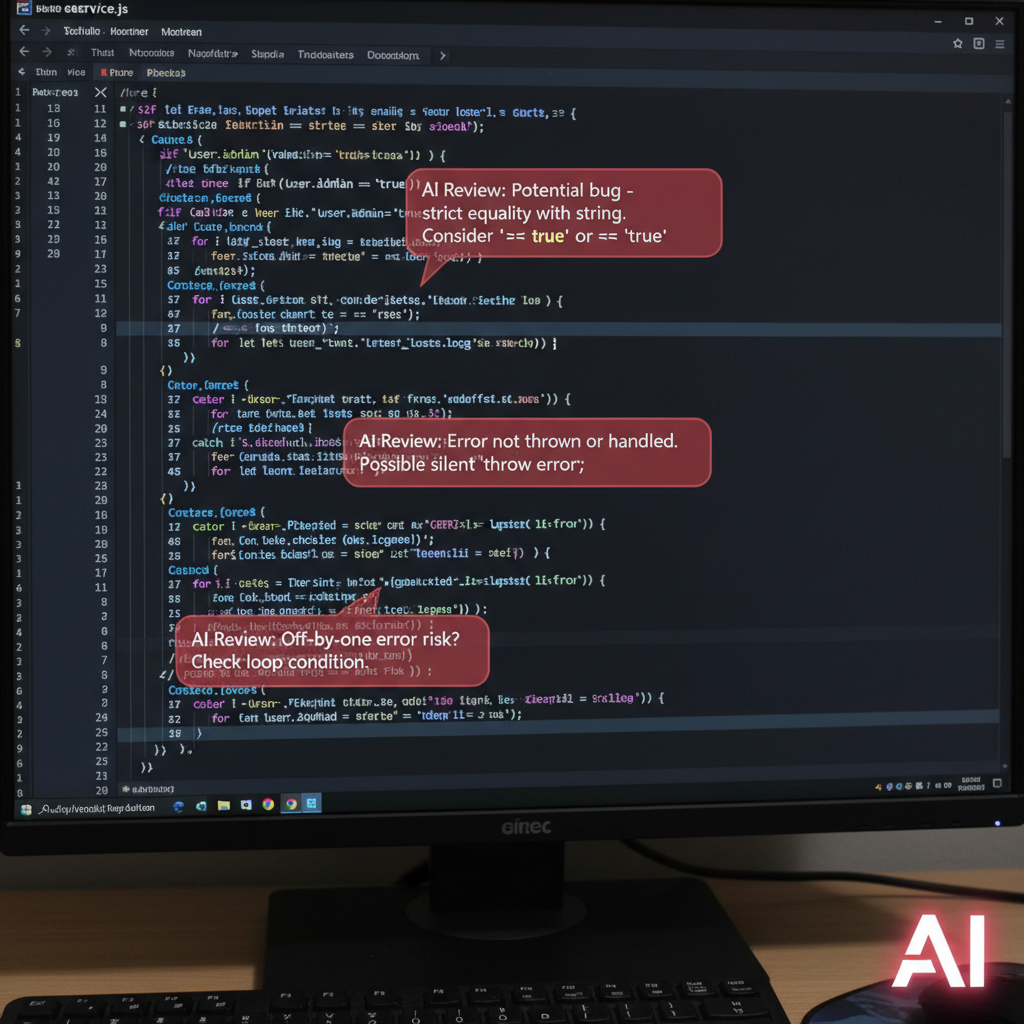
Static analysis tools catch defects without executing code. Integrating linters, SAST (Static Application Security Testing) tools, and type checkers into the IDE and pre-commit hooks means developers receive feedback in seconds — not hours.
For JavaScript/TypeScript teams, ESLint with strict rules and TypeScript's strict mode eliminate entire categories of runtime errors. For Java teams, tools like SonarQube and Checkstyle enforce quality gates before code reaches the CI pipeline.
The key to making static analysis effective is integrating it at the earliest possible point — in the developer's IDE, not just in the CI pipeline. When a developer sees a linting error as they type, they fix it immediately. When they see it only after pushing a commit, they have already context-switched and the fix takes longer.
Modern IDE integrations for ESLint, SonarLint, and Semgrep provide real-time feedback that makes static analysis feel like a natural part of the development workflow rather than an external gate.
Unit Test Coverage as a First-Class Metric
Unit tests are the fastest, cheapest form of automated testing. A shift-left culture treats unit test coverage not as a vanity metric but as a quality signal. Teams should aim for high coverage of business logic, edge cases, and error paths — not just the happy path.
Test-Driven Development (TDD) is the gold standard: write the test first, watch it fail, then write the minimum code to make it pass. This discipline produces modular, testable code as a natural by-product.
However, coverage percentage alone is a misleading metric. 80% line coverage that only tests the happy path is far less valuable than 60% coverage that thoroughly tests business logic, boundary conditions, and error handling. Teams should focus on mutation testing — using tools like Stryker or PIT to verify that their tests actually catch defects rather than just executing code paths.
A practical target for most teams: 80%+ coverage of business logic and domain models, with lower targets acceptable for infrastructure and integration code that is better tested at higher levels of the test pyramid.
CI/CD Pipeline Integration
Shift-left testing reaches its full potential when quality gates are embedded in the CI/CD pipeline. Every pull request should trigger a comprehensive suite of automated checks that provide fast, reliable feedback.
A well-designed CI quality gate for a modern web application might include:
- 1Static analysis and linting (< 30 seconds)
- 2Unit test suite with coverage threshold enforcement (< 2 minutes)
- 3Integration tests for critical paths (< 5 minutes)
- 4Security scanning — dependency audit (npm audit, Snyk) and SAST (< 3 minutes)
- 5Accessibility checks using axe-core or Pa11y (< 2 minutes)
- 6Performance budget checks using Lighthouse CI (< 3 minutes)
Failing any gate blocks the merge. This makes quality a shared responsibility — not a QA team problem. When a developer's pull request fails a security scan, they fix the vulnerability. When it fails an accessibility check, they fix the contrast ratio. Quality becomes everyone's job.
The total pipeline time matters enormously. A quality gate that takes 45 minutes provides much weaker shift-left benefits than one that takes 10 minutes, because developers will batch their commits and context-switch while waiting. Invest in pipeline optimisation — parallelisation, caching, and test selection — to keep feedback loops tight.
Contract Testing for Microservices
In microservices architectures, integration failures are one of the most common and costly categories of production defects. Service A changes its API response format, and Service B — which consumes that API — breaks in production. Traditional integration testing catches this, but only after both services are deployed to a shared environment.
Contract testing solves this problem by allowing each service to verify its integration contracts independently, without requiring a live instance of the other service. Tools like Pact and Spring Cloud Contract enable consumer-driven contract testing, where the consumer service defines the contract it expects and the provider service verifies that it meets that contract.
This approach shifts integration testing dramatically to the left — contracts can be verified on every pull request, in the developer's local environment, without any shared infrastructure. Teams that adopt contract testing typically see a 60–70% reduction in integration-related production incidents.
Contract testing is particularly valuable for teams that own multiple services, as it creates a safety net for refactoring and API evolution. When a provider team wants to change an API, they can immediately see which consumers would be affected and coordinate the change proactively rather than discovering breakage in production.
Measuring the Impact of Shift-Left
How do you know shift-left is working? The answer lies in tracking a specific set of metrics before and after adoption, and comparing trends over time. Vanity metrics like "number of tests written" tell you nothing about quality outcomes. These metrics do:
- Defect escape rate: The percentage of defects that reach production versus total defects found. A healthy shift-left programme should drive this below 5%.
- Mean time to detect (MTTD): How quickly defects are found after they are introduced. Shift-left should reduce MTTD from days or weeks to hours or minutes.
- Cost per defect by phase: Track where defects are being found. Shift-left success means the distribution moves left — more defects found in requirements and development, fewer in QA and production.
- Sprint velocity: Counter-intuitively, shift-left often increases velocity by reducing rework. Teams spend less time on bug fixes and more time on new features.
- Test cycle time: How long it takes to run the full automated test suite. This should decrease as teams invest in parallelisation and optimisation.
- Change failure rate: The percentage of deployments that cause a production incident. This is a DORA metric that directly reflects the effectiveness of your quality practices.
Teams that fully adopt shift-left typically see a 60–85% reduction in production defects within two to three quarters. The investment in shift-left practices pays back within the first quarter through reduced incident response costs alone.
Common Pitfalls and How to Avoid Them
Shift-left initiatives fail for predictable reasons. Understanding these pitfalls in advance dramatically increases your chances of success.
Pitfall 1: Treating shift-left as a QA team initiative. Shift-left only works when it is a whole-team commitment. If developers see quality as "the QA team's job," they will not write unit tests, participate in BDD sessions, or fix static analysis warnings. Leadership must communicate clearly that quality is a shared responsibility.
Pitfall 2: Adding too many quality gates too quickly. A CI pipeline that takes 45 minutes and blocks merges for minor linting issues will be circumvented or disabled. Start with the highest-value, fastest checks and add more gates incrementally as the team builds confidence in the process.
Pitfall 3: Focusing on coverage metrics rather than quality outcomes. 90% code coverage with poor test quality is worse than 70% coverage with excellent tests, because it creates false confidence. Focus on mutation testing scores and defect escape rates rather than coverage percentages.
Pitfall 4: Neglecting test maintenance. Automated tests are code, and they require the same care as production code. Flaky tests that fail intermittently are worse than no tests — they erode trust in the test suite and cause teams to ignore failures. Invest in test reliability as seriously as you invest in test coverage.
Pitfall 5: Skipping the cultural change. Shift-left is ultimately a cultural transformation. Technical practices without cultural buy-in will not stick. Invest in training, celebrate quality wins publicly, and make quality metrics visible to the whole team.
Getting Started: A Practical Roadmap
You do not need to transform everything at once. A phased approach reduces risk and allows the team to build confidence and momentum before tackling more complex changes.
- Phase 1 — Quick wins (Weeks 1–4):
- Embed a QA engineer in sprint planning for one team. Measure defect escape rate over two sprints.
- Add a static analysis gate to your CI pipeline. Track how many issues are caught before code review.
- Introduce BDD for one new feature. Measure the reduction in requirement ambiguity and rework.
- Phase 2 — Build the foundation (Months 2–3):
- Establish unit test coverage thresholds and enforce them in CI.
- Implement security scanning in the pipeline.
- Run a "three amigos" session for every new story.
- Phase 3 — Scale and optimise (Months 4–6):
- Introduce contract testing for your highest-risk service integrations.
- Implement mutation testing to validate test quality.
- Add performance budget checks to the CI pipeline.
- Measure and report on DORA metrics monthly.
Shift-left is a journey, not a destination. Each incremental improvement compounds over time, and the cultural shift — treating quality as everyone's responsibility — is ultimately more valuable than any individual tool or practice. The organisations that sustain shift-left programmes over years see compounding returns: faster releases, fewer incidents, higher developer satisfaction, and lower total cost of ownership.
Conclusion
Shift-left testing is one of the highest-leverage investments a software organisation can make. The evidence is clear: teams that embed quality early in the development lifecycle ship faster, with fewer defects, at lower cost. The practices are well-understood, the tools are mature, and the ROI is measurable.
The barrier to adoption is not technical — it is cultural. Shift-left requires a genuine commitment from leadership, developers, and QA engineers alike to treat quality as a shared, continuous responsibility rather than a final gate. That commitment, once made and sustained, transforms not just the quality of software but the entire experience of building it.
At QAble, we have helped dozens of organisations implement shift-left testing programmes that deliver measurable results within the first quarter. If you are ready to start your shift-left journey, our team of QA strategists is here to help you build a programme that fits your team, your technology stack, and your business goals.
About the Author
QAble Team
QA Engineering Team
The QAble team comprises senior QA engineers, automation architects, and testing strategists with 10+ years of experience delivering quality at scale for enterprise and startup clients across 20+ industries.